Published on 09 Sep 26 | Updated on 9 September 2026
Peptide drug discovery is the process of designing, synthesising, testing and optimising peptide molecules to investigate biological targets or develop therapeutic candidates. Depending on the programme, peptides can be used for target validation, screening, structure-activity relationship (SAR) studies, optimisation and therapeutic development.
Peptides occupy a distinctive chemical and pharmacological space between small molecules and larger biologics, combining high-affinity target recognition with substantial scope for sequence-level optimisation.
It provides a powerful route to interrogating, and potentially modulating, targets and interaction surfaces that remain difficult to address with conventional small-molecule approaches. That capacity for precise molecular recognition, combined with the flexibility to modify sequence and structure, gives researchers multiple ways to investigate and optimise biological activity.
Peptide therapeutics continue to play an important role in modern drug development, with recent regulatory approvals highlighting the continued interest in peptide-based medicines. Read the 2025 review of peptide drug approvals.
For scientists, the value of peptides lies not simply in being a distinct drug modality, but in what their sequence, structure and chemistry allow researchers to investigate and optimise.
In this article, we take a closer look at the peptide drug discovery journey – from design and synthesis through screening, optimisation and the development of peptide candidates.
For researchers working with external partners, peptide drug discovery services can support this workflow across peptide design, synthesis, screening and optimisation.
Why Peptides Matter in Drug Discovery?
Peptides form specific interactions with receptors, enzymes and other proteins involved in biological processes. This makes them useful as research tools as well as potential starting points for therapeutic development.
One important area is protein-protein interaction (PPI) research. Many PPIs involve broad, extended interfaces that conventional small molecules struggle to address. Peptides can provide extended interaction surfaces, making them useful for investigating biological interactions that may be challenging to address with conventional small molecules.
Peptides also provide considerable scope for optimisation. Researchers can modify amino acid sequences, incorporate non-natural amino acids, and alter or constrain peptide conformation to study how structural changes influence activity, selectivity, stability, and other properties.
This creates an iterative discovery cycle:
Design → Synthesis → Testing → Analysis → Optimisation → Resynthesis
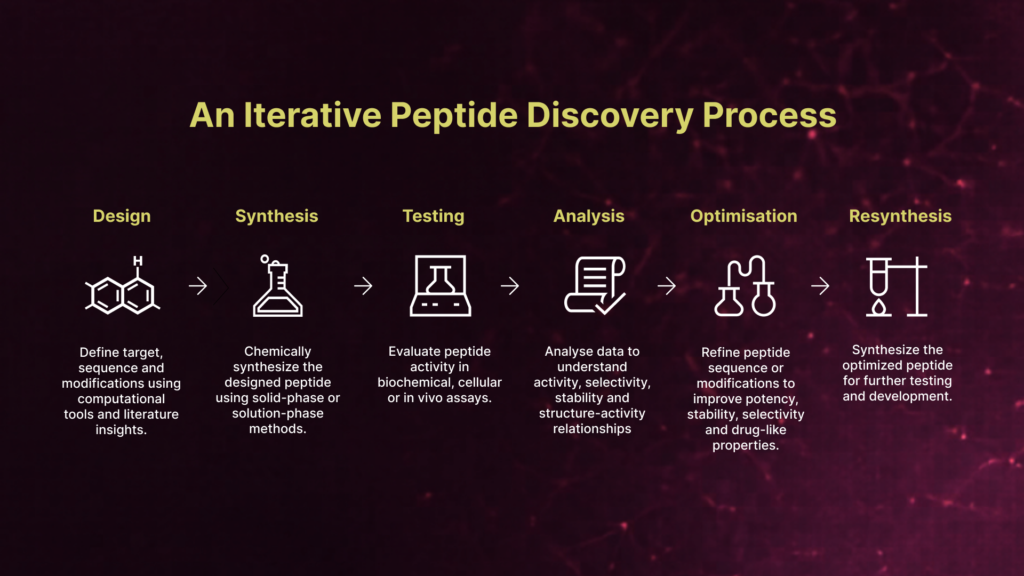
This iterative cycle is why peptide synthesis can be an important part of peptide drug discovery programmes rather than simply a final material-production step.
How Are Peptides Used in Drug Discovery?
Peptides are used at multiple stages of drug discovery, from understanding target biology and identifying active sequences to SAR, optimisation and therapeutic development.
Target Validation and Mechanistic Studies
Peptides help researchers investigate target biology, study molecular interactions and evaluate whether modulating a pathway produces the expected biological response.
These studies can provide evidence supporting target engagement and help investigate the underlying mechanism of action before a programme progresses towards more advanced therapeutic development.
Screening and Hit Identification
Peptide sequences can be systematically varied to investigate their interaction with a biological target.
Researchers may compare:
- Sequence variants
- Truncated sequences
- Amino acid substitutions
- Modified residues
- Linear and constrained structures
- Different conjugation strategies
The resulting data can help identify peptide sequences or structural features associated with desirable biological activity.
What Is Peptide SAR?
Systematic analogue generation allows researchers to establish structure–activity relationships and guide iterative peptide optimisation.
In peptide discovery, SAR studies can involve changing individual amino acids, removing parts of a sequence, introducing modified residues, or altering the overall peptide structure.
The objective is to understand which structural features contribute to properties such as:
- Potency
- Selectivity
- Stability
- Target engagement
- Other desired biological properties
Systematic analogue generation therefore allows researchers to move from an initial peptide sequence towards increasingly optimised molecules.
Protein-Protein Interaction Research
Protein-protein interactions represent an important class of drug discovery targets. Their interfaces can be structurally diverse and may not always contain conventional small-molecule binding pockets.
Peptides and peptide-based approaches provide useful starting points for investigating — and in some cases modulating — these interactions. Nature Reviews Drug Discovery: Protein-protein interactions
Therapeutic Development
Peptide medicines are already established across multiple therapeutic areas, with metabolic and endocrine diseases being particularly prominent examples.
Modern peptide therapeutics also demonstrate how structural engineering can influence pharmacological properties.
For example, tirzepatide is a 39-amino-acid peptide modified with a C20 fatty diacid moiety, illustrating how chemical modification can influence peptide exposure and pharmacokinetic properties. U.S. FDA: Tirzepatide Review
Peptide-Drug Conjugates and Targeted Approaches
Peptides can also form part of more complex therapeutic constructs.
In a peptide–drug conjugate (PDC), a peptide component is chemically linked to a therapeutic payload. Depending on the design, the peptide may contribute target recognition or delivery, while the attached payload provides the intended pharmacological activity.
This extends the use of peptides beyond standalone therapeutics into targeted delivery and other engineered therapeutic approaches.
What Are the Advantages of Peptides in Drug Discovery?
Peptides offer several properties that can be valuable during discovery and optimisation.
|
Peptide property |
Potential value in drug discovery |
|
Target recognition |
Can support selective interactions with biological targets |
|
Larger interaction surfaces |
Can help researchers investigate extended protein interfaces |
|
Sequence flexibility |
Enables systematic SAR exploration |
|
Structural flexibility |
Allows different conformations and architectures to be investigated |
|
Chemical modification |
Enables investigation and optimisation of properties such as stability, exposure and pharmacokinetics |
Target Specificity
Peptides can form specific interactions with receptors and proteins, supporting selective target engagement.
Larger Interaction Surfaces
Their size and structure can allow peptides to engage molecular surfaces that may be difficult to address with smaller molecules.
Sequence-Level Optimisation
Researchers can systematically modify peptide sequences through substitution, truncation and analogue generation to establish structure-activity relationships.
Structural and Chemical Flexibility
Approaches such as cyclisation, stapling and incorporation of non-natural amino acids can expand the structural space available for optimisation.
The key value of peptides is therefore not simply their specificity. It is the combination of specific molecular recognition and the ability to iteratively modify the molecule around a biological target.
Peptides vs Small Molecules: What Is the Difference?
Peptides and small molecules offer different approaches to drug discovery.
Small molecules are generally compact and can be well suited to defined binding pockets. Peptides can offer extended molecular interaction surfaces and allow researchers to explore targets through sequence- and structure-based optimisation.
This difference can become particularly relevant when investigating extended protein interfaces or biological targets that may be difficult to address with conventional small molecules.
However, peptides also present challenges that need to be considered during development, including stability, permeability, pharmacokinetics, delivery and manufacturing.
The choice of modality should therefore depend on the target, mechanism, desired pharmacology and development requirements, rather than assuming that peptides or small molecules are universally preferable.
What Are the Key Challenges of Peptide Drug Discovery?
Peptide programmes can face several challenges that need to be considered early in discovery.
|
Challenge |
Why it matters |
|
Proteolytic stability |
Enzymatic degradation can reduce biological exposure |
|
Half-life |
Rapid clearance can limit duration of action |
|
Permeability |
Limited membrane penetration can restrict access to some intracellular targets |
|
Oral bioavailability |
Gastrointestinal degradation and limited absorption can restrict systemic exposure following oral administration |
|
Manufacturing |
Longer, aggregation-prone or highly modified sequences can increase synthesis complexity and may require additional optimisation and purification |
|
Delivery |
Administration route can influence achievable exposure |
Peptide therapeutics can be affected by enzymatic degradation, limited permeability and rapid plasma clearance. These properties can influence both experimental design and eventual therapeutic development. PubMed: Challenges in peptide therapeutics
Proteolytic Stability
Peptides can be susceptible to enzymatic degradation. If a peptide is rapidly broken down, maintaining sufficient biological exposure can become difficult.
Half-Life and Clearance
Rapid clearance can limit the duration for which a peptide remains available at its target.
Permeability
Limited membrane penetration can be an important consideration when the intended target is located inside a cell.
Oral Delivery
Oral peptide delivery presents additional challenges because peptides must withstand the gastrointestinal environment, avoid enzymatic degradation and cross biological barriers before reaching systemic circulation.
Research continues to explore chemical modifications, permeation enhancers, encapsulation and other delivery technologies to address these limitations. PubMed: Strategies for overcoming barriers to oral peptide delivery
For scientists, this means that strong activity in an assay is only one part of peptide optimisation. The molecule also needs properties that support its intended application.
How Are Peptides Optimised to Overcome These Challenges?
Peptide optimisation involves modifying the molecule according to the specific property that needs improvement.
|
Optimisation approach |
Potential purpose |
|
Cyclisation |
Constrain conformation and potentially improve stability |
|
Stapling |
Stabilise a desired peptide conformation |
|
Non-natural amino acids |
Expand chemical and structural space |
|
PEGylation |
Modify pharmacokinetic behaviour |
|
Lipidation |
Influence exposure and circulation properties |
|
Conjugation |
Introduce targeting, delivery or other functionality |
These approaches allow researchers to move beyond the original sequence and investigate molecules with different biological and physicochemical properties.
Importantly, optimisation is rarely about improving a single property in isolation. A modification that improves stability, for example, may affect permeability, potency, or other characteristics.
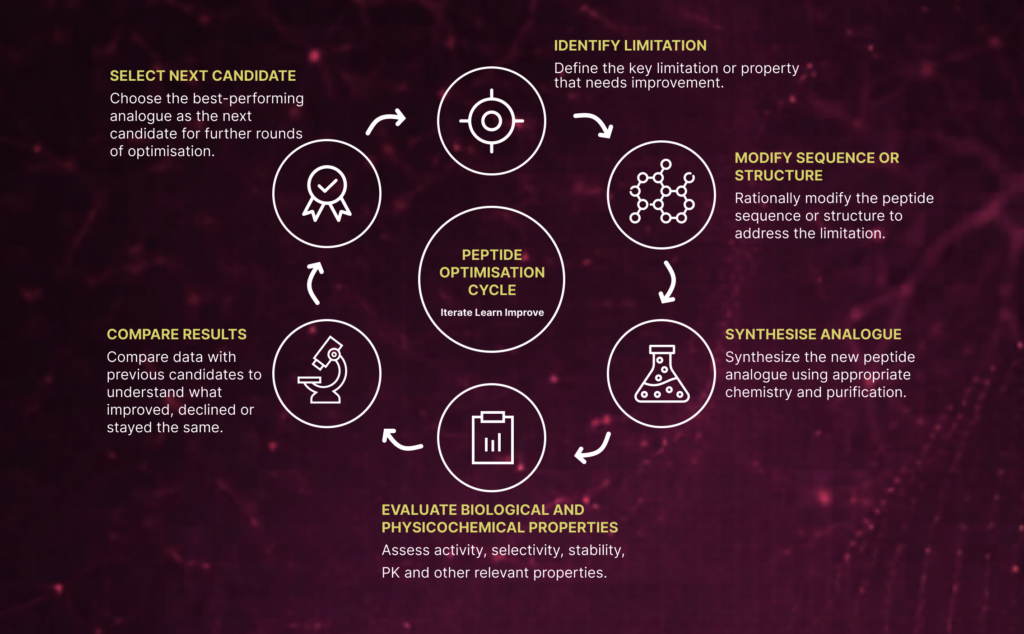
This is why peptide optimisation is generally an iterative process in which chemistry and biological data continually inform the next design cycle.
What to Consider Before Starting a Peptide Drug Discovery Project?
The intended experiment should guide the peptide specification from the beginning.
Here are the key points to work through before settling on a peptide specification:
Sequence and Structure
Consider:
- Sequence length and composition
- Hydrophobicity and aggregation propensity
- Non-natural amino acids
- Linear, cyclic, stapled or branched format
- Required termini
- Potential conjugation or labelling
Quantity and Purity
The required quantity should be considered across the wider experimental plan.
Early binding or analytical studies may require relatively small quantities, while screening campaigns and follow-up studies may require more material.
Purity requirements should also reflect the intended application.
Analytical Requirements
Depending on the study, researchers may require:
- Analytical HPLC/UPLC
- LC-MS / HRMS, where required
- Certificate of Analysis
- Additional characterisation such as NMR, where appropriate
Downstream Application
Specifications can vary depending on whether the peptide is intended for:
- Binding studies
- Screening
- Cell-based assays
- Enzymatic assays
- DMPK studies
- In vivo research
Timeline
If synthesis is linked to a screening campaign or programme milestone, turnaround time can directly affect the wider discovery workflow.
Defining these requirements early can help ensure that the material is appropriate for the experiment and reduce avoidable changes later.
For a closer look at how turnaround time can affect peptide discovery programmes, Fast Custom Peptide Synthesis: Why It Matters for Peptide Drug Discovery provides further context.
For early-stage companies, the practical considerations can also extend to access to resources and broader discovery support. Programmes such as the o2h Kickstarter Peptide are designed around the needs of emerging teams working on early peptide programmes.
How to Select a Custom Peptide Synthesis Partner?
For a research programme, the relevant question is not simply whether a supplier can synthesise a sequence.
When evaluating custom peptide synthesis services, researchers should also consider whether the partner can support repeat synthesis, analogue generation, purification and characterisation as the programme develops.
Chemistry Expertise
Can the partner handle the required sequence, modifications, and structural complexity?
Purification and Characterisation
Can they provide appropriate purification and analytical data alongside the final material?
Scale Flexibility
Can they support the project as material requirements change?
Analogue Synthesis
Can they support repeat synthesis for SAR and optimisation?
Turnaround Time
Can delivery align with the experimental programme and project milestones?
Broader Discovery Support
Can peptide work connect with chemistry, biology, DMPK, or other downstream capabilities? This broader capability can be particularly valuable when working with a peptide CRO for programmes that require repeated cycles of synthesis, testing and optimisation.
This matters most when peptides need to be synthesised repeatedly during SAR and optimisation.
How o2h Discovery Support Peptide Drug Discovery and Research?
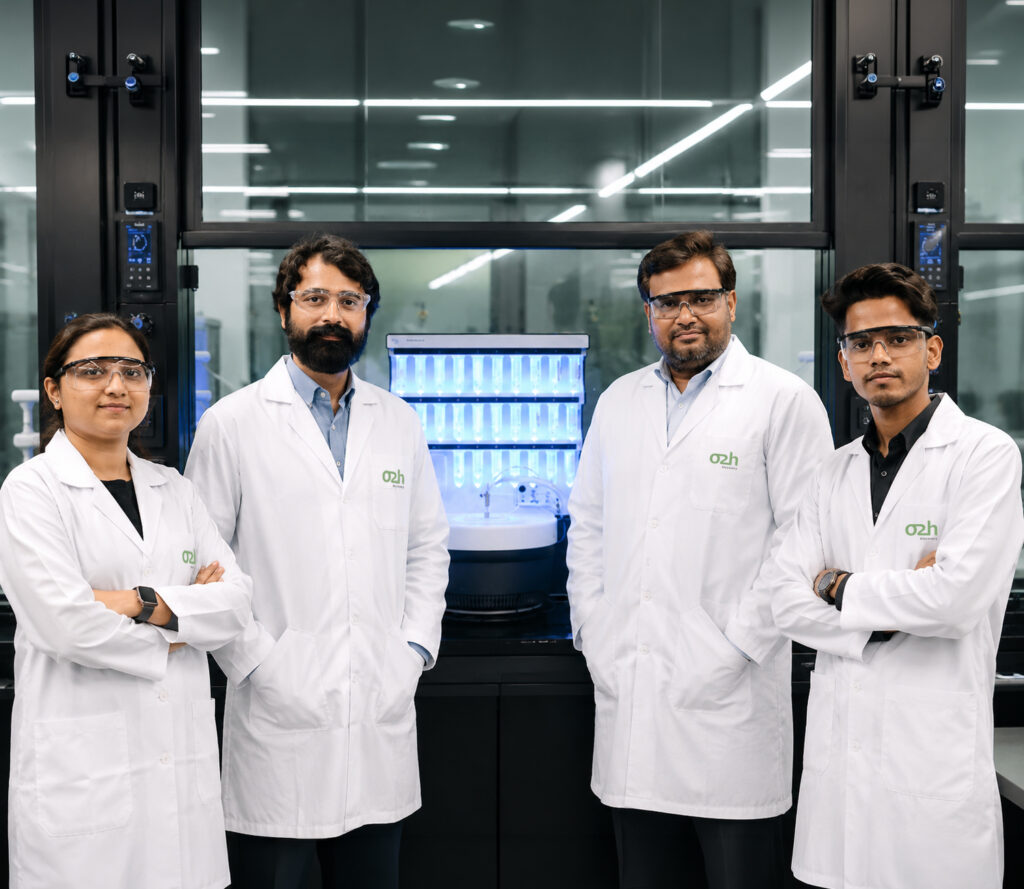
At o2h Discovery, the peptide platform supports researchers through custom peptide synthesis services, modification, purification and characterisation. It supports peptide synthesis from milligram quantities through gram scale, depending on sequence length, complexity, modification requirements and project objectives, including solid-phase peptide synthesis, cyclisation, stapling, conjugation and purification, supported by analytical capabilities including HPLC and LC-MS.
Peptide Synthesis and Automation
o2h Discovery’s peptide platform combines dedicated peptide chemistry expertise with automated synthesis infrastructure to support both individual peptide projects and multiple-peptide requirements.
The synthesis platform includes:
- CEM Liberty Blue – a microwave-assisted peptide synthesiser designed to support challenging peptide synthesis, including the incorporation of non-natural residues, branching and cyclisation.
- Biotage Syro I – a parallel peptide synthesiser supporting efficient synthesis of multiple peptides and follow-up optimisation
- Biotage Syro II – an automated, high-throughput, multi-channel peptide synthesiser designed to support large peptide libraries and demanding synthesis applications.
Together, these capabilities allow the team to support different synthesis requirements, from individual peptides and optimisation analogues through to parallel peptide generation and more demanding synthesis programmes.
Purification and Analytical Characterisation
Synthesis is supported by a dedicated analytical team and laboratory infrastructure designed to support rapid delivery of peptide projects.
Analytical capabilities include:
- LC-MS
- 400 MHz Bruker NMR
Purification capabilities include:
- Reverse-phase HPLC
- Preparative HPLC
Peptide Formats and Modifications
The platform primarily uses solid-phase peptide synthesis (SPPS), supported by complementary solution-phase chemistry where appropriate for specific peptide architectures or modifications.
The platform supports peptides of approximately 20 residues as well as longer sequences, including projects extending to ~50 residues, depending on sequence composition, complexity and synthesis feasibility, including:
Peptide Formats
- Linear peptides
- Long-chain peptides
- Branched peptides
- Macrocyclic peptides
- Stapled peptides
Chemical Modifications
- Acetylation
- Succinylation
- PEGylation
- Lipidation
- Disulfide formation
- Head-to-tail cyclisation
- Lactam cyclisation
- Conjugation
Since 2023, o2h Discovery has delivered High-Quality Custom Peptide Synthesis from Single Sequences to Large Libraries.
Behind this capability is a dedicated team of peptide chemists who supports the peptide drug discovery with projects across synthesis, modification, purification, and characterisation. Read more about the scientists behind the custom peptide synthesis services.
For projects where speed is a key requirement, o2h Discovery also offers a defined turnaround programme for eligible standard peptides. For eligible standard linear peptides up to 20 amino acids and up to 1 gram, the o2h Peptide Guarantee offers a two-week synthesis timeline with ≥95% purity and analytical data including HPLC, MS and a Certificate of Analysis. Complex or non-standard projects are assessed separately.
The peptide platform sits within o2h Discovery’s broader integrated drug discovery capabilities spanning chemistry, medicinal chemistry, biology, DMPK and Scale-up/PR&D.
This allows peptide synthesis to connect with wider experimental requirements and supports the repeated design, synthesis, testing and optimisation cycles involved in peptide discovery.
Frequently Asked Questions
What is peptide drug discovery?
Peptide drug discovery is the process of designing, synthesising, testing and optimising peptide molecules to investigate biological targets or develop therapeutic candidates. It can involve target validation, screening, SAR studies, optimisation and therapeutic development.
What are peptide synthesis Services?
Peptide synthesis services are the chemical process of assembling amino acids into a specific peptide sequence. In drug discovery, peptide synthesis can be used to produce molecules for screening, biological testing, SAR studies and optimisation. Solid-phase peptide synthesis (SPPS) is widely used because it allows peptide sequences to be assembled step-by-step on a solid support and subsequently cleaved and purified.
How does peptide synthesis work?
Peptide synthesis involves building a peptide sequence by joining amino acids in a defined order, followed by cleavage, purification and analytical characterisation. In solid-phase peptide synthesis (SPPS), the growing peptide chain is assembled step-by-step on a solid support, with cycles of amino acid coupling and deprotection repeated until the desired sequence is completed. The final peptide is then cleaved from the support, purified and characterised.
How long does custom peptide synthesis take?
The timeline depends on the peptide sequence, length, purity requirement, modifications, scale and analytical requirements. Standard linear peptides are generally simpler to produce than long, highly modified or structurally constrained peptides. For eligible standard linear peptides up to 20 amino acids and 1 gram, the o2h Peptide Guarantee provides a two-week synthesis timeline.
Can custom peptides be modified for drug discovery?
Yes. Peptides can be chemically modified to investigate or improve properties such as stability, conformation, exposure or targeting. Common approaches include cyclisation, stapling, incorporation of non-natural amino acids, PEGylation, lipidation and conjugation. The appropriate modification depends on the biological and physicochemical property being investigated.
What is peptide SAR?
Peptide SAR, or structure-activity relationship analysis, examines how changes to a peptide’s sequence or structure affect its biological activity. Researchers can use substitutions, truncations and structural modifications to identify features associated with potency, selectivity and other properties.
Can peptides be synthesised for SAR studies?
Yes. Custom peptide synthesis can support SAR programmes by enabling researchers to generate sequence variants, truncations, substitutions and structurally modified analogues. Producing these analogues systematically allows biological data to be compared with structural changes and can help identify features associated with potency, selectivity, stability and other properties.
How are peptides optimised for drug discovery?
Researchers can modify peptide sequences and structures using approaches such as amino acid substitution, truncation, cyclisation, stapling, non-natural amino acids, PEGylation, lipidation and conjugation. The appropriate approach depends on the property that needs to be improved.
When should I consider a peptide synthesis partner rather than ordering individual peptides?
A dedicated peptide synthesis partner can be particularly useful when a programme requires repeated peptide synthesis, SAR libraries, complex modifications, purification and analytical characterisation. Working with a partner that can support these requirements within the same workflow can reduce the need to manage separate suppliers as the programme develops.
Conclusion
Peptides provide a versatile molecular framework for investigating biological targets and developing therapeutic candidates. Their combination of specific molecular recognition, sequence-level optimisation and chemical flexibility creates opportunities across target validation, screening, SAR studies, protein-protein interaction research and therapeutic development.
At the same time, peptide programmes require careful consideration of stability, permeability, pharmacokinetics, delivery and manufacturability.
For scientists, the key is to consider the target, peptide design, synthesis, biological testing and downstream requirements together, rather than treating synthesis as an isolated step.
With an integrated approach to peptide design, synthesis, purification, characterisation and biological evaluation, custom peptide chemistry can become an effective component of the broader drug discovery workflow
Have a peptide drug discovery programme to discuss? Connect with the o2h Discovery peptide drug discovery and chemistry team.
Email: discovery@o2h.com
Contact the team: https://o2hdiscovery.co/contact/

Scientifically reviewed by

Rahul Rayani
Assistant Director-II
Rahul leads the peptide chemistry team and has successfully delivered over 𝟮𝟬𝟬 𝗰𝘂𝘀𝘁𝗼𝗺 𝗽𝗲𝗽𝘁𝗶𝗱𝗲𝘀, including stapled, cyclic, and unnatural amino acid sequences. With deep expertise in SPPS (Fmoc/t-Boc), cyclisation chemistry, conjugation, and advanced purification (HPLC, LC-MS, HRMS, NMR), Rahul combines technical precision with leadership, guiding teams to achieve milestones consistently. Notably, he delivered a 50-peptide S–S bridge cyclic library, accelerating complex discovery projects.